Who Holds the Keys? Choosing the Right Custody Model for Active Crypto Traders in 2025
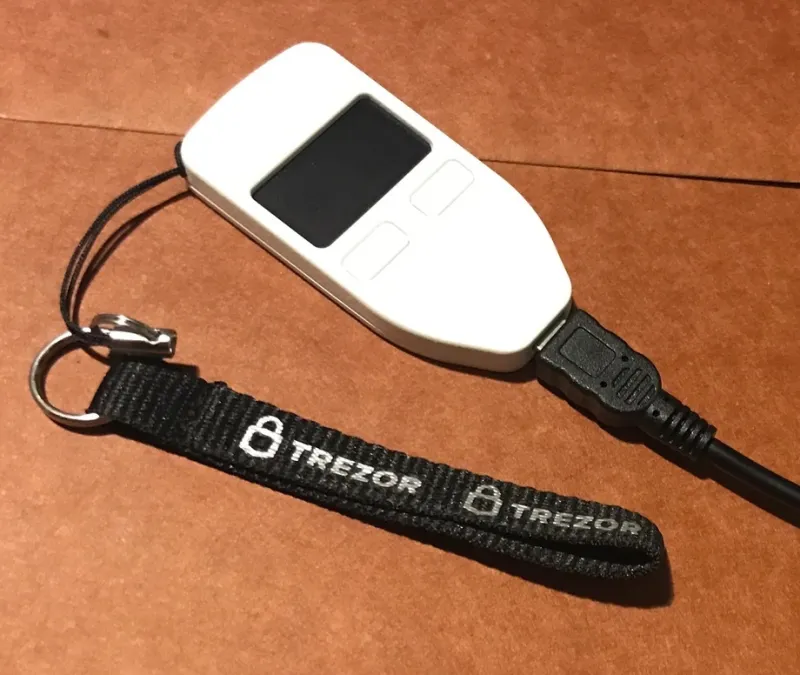
Photo: Sanjev Rajaram, CC BY-SA 4.0, via Wikimedia Commons
In traditional finance, custody is largely invisible. Your brokerage holds your shares, the SIPC backstops a portion of your balance, and you focus on the trade. In the on-chain world, custody is one of the most consequential decisions a trader makes — and it shapes everything from how quickly you can execute a position to how exposed you are when a platform fails, a regulator intervenes, or a private key goes missing.
For US-based traders operating in 2025, the custody landscape has grown more complex, not less. The collapse of several centralized platforms in prior years reshuffled assumptions about counterparty risk. Simultaneously, self-custody tooling has matured, and institutional-grade multi-signature solutions have become accessible to individual traders. The result is a broader menu of options — each with trade-offs that are rarely spelled out plainly.
This article examines the four primary custody models available to active traders today, the scenarios in which each performs best, and the costs that tend to surface only after a problem arises.
Centralized Exchange Custody: Convenience With Counterparty Risk
For high-frequency traders, centralized exchanges remain the dominant infrastructure choice. The reasons are practical: order books are deep, execution is fast, and the user experience has been refined over years of competitive pressure. Fiat on-ramps and off-ramps are integrated, and most major US-regulated platforms now provide 1099 tax forms, which simplifies year-end reporting considerably.
The hidden costs, however, are substantial. When assets sit on an exchange, the trader holds a contractual claim against the platform — not the underlying asset itself. In the event of insolvency, that distinction becomes legally significant. FDIC insurance covers only fiat cash balances held at partner banks, not cryptocurrency holdings. Most platform insurance policies are narrow, covering hot wallet breaches up to a defined limit while excluding losses from platform insolvency, regulatory freezes, or social engineering attacks.
Regulatory exposure is another underappreciated variable. US-based centralized exchanges are subject to Know Your Customer and Anti-Money Laundering requirements, meaning every account is tied to a verified identity. While this simplifies tax reporting, it also creates a single point of regulatory scrutiny. Account freezes — whether triggered by suspicious activity flags or government subpoenas — can lock a trader out of positions at the worst possible moment.
Best suited for: Traders prioritizing execution speed, fiat liquidity, and simplified tax reporting who are comfortable with counterparty and regulatory risk.
Self-Hosted Software Wallets: Maximum Autonomy, Maximum Responsibility
Self-custody via software wallets — MetaMask, Phantom, Rainbow, and their peers — places full control of private keys in the trader's hands. There is no counterparty, no platform risk, and no gatekeeper between the trader and their assets. For on-chain activity such as decentralized exchange trading, NFT transactions, and DeFi protocol interactions, a software wallet is often the only viable interface.
The trade-off is operational overhead and irreversibility. A compromised seed phrase means permanent, unrecoverable asset loss. Phishing attacks targeting self-custody users have grown more sophisticated, and the absence of a recovery mechanism — which is a feature, not a flaw, from a security architecture standpoint — becomes a liability when human error enters the equation.
Tax reporting complexity also increases meaningfully. Every on-chain transaction generates a taxable event under current IRS guidance, and self-custody wallets do not produce consolidated tax documents. Traders managing active on-chain portfolios typically require third-party tax software — Koinly, CoinTracker, or similar platforms — to reconstruct cost basis across multiple wallets and chains.
Best suited for: Traders active on decentralized protocols who accept the operational responsibility of key management and are prepared to invest in proper tax tracking infrastructure.
Hardware Wallets: Cold Storage With Warm Limitations
Hardware wallets — Ledger, Trezor, and Coldcard being the most widely used among US traders — store private keys on an offline device, dramatically reducing exposure to remote attacks. For traders holding significant long-term positions alongside an active trading book, hardware wallets offer a logical segregation strategy: cold storage for the core portfolio, hot wallet or exchange for active positions.
The limitations emerge around trading frequency. Hardware wallet transactions require physical confirmation on the device, introducing latency that is incompatible with time-sensitive execution. More subtly, hardware wallet manufacturers have faced their own security controversies — Ledger's 2020 customer data breach exposed mailing addresses for over 270,000 users, creating targeted physical theft risk that most traders had not anticipated.
Recovery complexity deserves attention. Seed phrase storage remains the single point of failure, and estate planning around hardware wallets is genuinely difficult. Traders who hold meaningful assets in cold storage without documented recovery procedures create succession problems that have no clean resolution.
Best suited for: Traders maintaining a long-term position reserve separate from their active trading capital, who are disciplined about physical security and seed phrase management.
Multi-Signature Solutions: Institutional Controls for Individual Traders
Multi-signature custody — requiring two or more private keys to authorize a transaction — was once the domain of institutional treasuries and exchanges. In 2025, platforms such as Casa, Unchained, and Gnosis Safe have made multi-sig configurations accessible to individual traders with meaningful asset bases.
The security advantages are significant. A single compromised key cannot drain a multi-sig wallet. For traders concerned about both external attacks and internal operational errors, distributing key custody across devices and locations eliminates single points of failure. Some multi-sig providers also offer collaborative custody arrangements where the provider holds one key as a recovery backstop — a middle path between full self-custody and exchange custody.
The costs are real. Setup and ongoing management require more technical engagement than any other custody model. Transaction fees are higher due to the additional on-chain data required for multi-sig authorization. And for active traders executing frequent transactions, the approval workflow introduces friction that can conflict with time-sensitive strategies.
From a tax and regulatory perspective, multi-sig wallets are treated identically to standard self-custody wallets under current IRS guidance. The reporting obligations are the same; the operational complexity is higher.
Best suited for: Traders with concentrated on-chain positions who prioritize security architecture over execution speed, and who have the technical capacity to manage distributed key infrastructure.
Building a Layered Custody Strategy
The most defensible approach for active US-based traders in 2025 is not a single custody model but a deliberate layering of several. A practical framework might allocate active trading capital to a regulated centralized exchange for execution efficiency and tax simplicity, maintain a self-custody software wallet for on-chain protocol access, and reserve long-term holdings in hardware or multi-sig custody.
This structure acknowledges that different asset categories and trading behaviors carry different custody requirements. It also distributes risk — no single point of failure, regulatory freeze, or key compromise can compromise the entire portfolio simultaneously.
The on-chain economy rewards traders who think carefully about infrastructure, not just markets. Custody decisions made at account setup tend to surface their consequences at the worst possible moments: during volatile markets, regulatory inquiries, or platform failures. Evaluating the full cost of each model — insurance gaps, recovery complexity, tax reporting burden, and operational overhead — before committing capital is among the most practical risk management steps any active trader can take.