When Your Own Wallet Says No: Navigating Hardware Security Friction in Active Crypto Trading
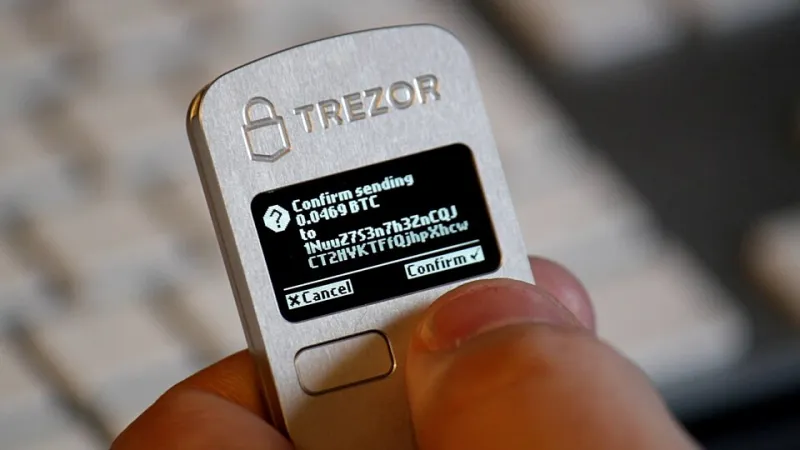
Photo: The original uploader was Ladislav Mecir at English Wikipedia., CC BY-SA 3.0, via Wikimedia Commons
The Security Tool That Became a Gatekeeper
For years, the hardware wallet sat at the center of every serious crypto trader's security philosophy. Cold storage, air-gapped signing, physical confirmation — these were the pillars of responsible self-custody. The assumption was simple: if you hold the device, you control the assets. That assumption is under pressure in 2025.
As hardware wallet manufacturers respond to a more complex threat environment — and as regulators push for compliance mechanisms embedded closer to the point of transaction — the devices themselves have grown considerably more opinionated. They now ask more questions, enforce more rules, and in certain configurations, require more parties to agree before a transaction moves forward. For long-term holders, this is largely a non-issue. For active traders operating on tight execution windows, it can mean missed opportunities, failed arbitrage, and real financial cost.
Multi-Signature Requirements and the Approval Delay Problem
Multi-signature wallet configurations have long been recommended for institutional custody and high-value holdings. The logic is sound: requiring two or three private keys to authorize a transaction dramatically reduces the attack surface. A single compromised device cannot drain a multi-sig vault.
The problem emerges when traders apply multi-sig architecture to accounts they also use for active trading. Consider a scenario common among mid-to-large retail traders: a 2-of-3 multi-sig setup where one key lives on a hardware wallet, one on a mobile device, and one with a trusted co-signer or backup service. Executing a trade during a volatile market window requires collecting two approvals. If the co-signer is unavailable, if the mobile device is offline, or if the hardware wallet's confirmation screen demands a manual review of an unfamiliar smart contract interaction, the transaction stalls.
In a market where a position can move two to four percent in under sixty seconds, a ninety-second approval delay is not a minor inconvenience. It is a structural disadvantage.
Account Abstraction: Power and Friction in the Same Feature Set
The broader rollout of account abstraction — particularly on Ethereum and its Layer 2 ecosystem — has introduced programmable logic directly into wallet behavior. Traders can now set spending limits, whitelist contract addresses, define time-locks, and configure session keys that permit limited automated activity without full private key exposure.
These features represent a genuine leap forward in security flexibility. They also introduce new categories of rejection. A hardware wallet operating within an account abstraction framework may refuse a transaction because it falls outside a pre-defined spending limit, because the destination contract was not whitelisted at setup, or because a session key has expired mid-trade. Each of these rejections is technically correct — the wallet is doing exactly what it was configured to do. But the trader on the other end, watching a liquidity window close, experiences it as the system working against them.
The deeper issue is that account abstraction configurations are often set during calmer moments and rarely revisited until they cause a problem. Whitelists go stale. Spending limits set conservatively during a bear market become binding constraints during a rally. Session keys expire without notification.
Compliance Checks and the Regulatory Layer
A newer and more contentious source of transaction friction involves compliance screening embedded at the firmware or application level. Several hardware wallet manufacturers have introduced — or are piloting — features that cross-reference destination addresses against sanctions lists maintained by bodies such as the U.S. Office of Foreign Assets Control. The intent is to prevent users from inadvertently transacting with blacklisted entities.
In practice, these checks have generated false positives. Addresses associated with certain DeFi protocols, mixing services, or even previously flagged wallets that have since been cleared can trigger holds or warnings that delay transaction signing. For a trader attempting to exit a position or execute a time-sensitive swap, a compliance-triggered pause is effectively a forced hold — one they did not choose and may not fully understand in the moment.
This dynamic is not going away. As regulatory scrutiny of on-chain activity intensifies in the United States, the pressure on wallet manufacturers to embed compliance logic will increase. Traders who do not account for this in their custody architecture are building on an assumption — that their wallet will always execute when instructed — that is increasingly unreliable.
Structuring a Wallet Hierarchy That Moves When You Need It To
The practical response to these friction points is not to abandon hardware wallets or disable security features. It is to build a layered custody architecture that separates assets by function and calibrates security accordingly.
A workable structure for active traders typically involves three tiers. The first is a cold storage vault — a hardware wallet in a strict multi-sig configuration, reserved for long-term holdings and large positions that are rarely touched. Security here is paramount; execution speed is irrelevant.
The second tier is a trading wallet: a hot or warm wallet with a single hardware device for signing, minimal multi-sig overhead, and a carefully maintained account abstraction configuration that is reviewed regularly. Whitelists should reflect current protocols. Spending limits should be calibrated to actual trading volume. Session keys should be managed with expiration dates that align with trading activity, not set-and-forgotten.
The third tier is a small operational wallet — sometimes called a burner or session wallet — funded with only what is needed for immediate activity. This wallet operates with maximum speed and minimum friction, and it is replenished from the trading wallet as needed. Its limited funding means that even a full compromise results in a bounded loss.
This structure does not eliminate security risk. It distributes it deliberately, ensuring that the assets most exposed to execution speed are also the assets with the smallest footprint.
Reviewing Your Configuration Before the Market Moves
One of the least glamorous but most important habits for active on-chain traders is periodic custody audits. Not security audits in the technical sense — reviews of your own configuration, conducted during quiet market periods, to ensure that the rules governing your wallets still reflect your current trading behavior.
Ask whether your whitelist includes every protocol you are actively using. Confirm that your spending limits accommodate your typical transaction sizes. Check session key expiration dates. If your hardware wallet firmware has been updated recently, review the release notes for any changes to compliance screening or contract interaction policies.
Hardware wallets are not passive instruments. They are increasingly active participants in your transaction flow, governed by rules that can be modified by manufacturers, configured by users, and triggered by external data sources. Treating them as static tools is a mistake that costs traders real money.
Security and Speed Are Not Opposites — But They Require Architecture
The hardware wallet rejection problem is not fundamentally a technology failure. It is a configuration and design failure. The tools exist to build custody structures that are both secure and operationally responsive. What is often missing is the deliberate architectural thinking required to connect those tools in a way that serves the full range of a trader's needs.
On-chain trading in 2025 demands more than a single device and a seed phrase. It demands a custody strategy — one that accounts for the realities of multi-sig delays, account abstraction complexity, and an evolving compliance environment. Traders who build that strategy proactively will spend less time watching rejections and more time executing with confidence.