The True Cost of Every Transaction: How Gas Economics Are Redrawing the Blockchain Map in 2025
For years, gas fees were treated as a minor friction cost—an inconvenience to be absorbed rather than a variable to be strategically managed. That calculus has fundamentally changed. In 2025, the cumulative weight of transaction costs is actively determining which blockchains attract liquidity, which NFT marketplaces retain volume, and which traders remain profitable after accounting for the overhead embedded in every on-chain action.
The conversation has matured from "gas is too expensive on Ethereum" into a nuanced cost-benefit analysis spanning layer-1 networks, layer-2 rollups, and emerging alternatives. For anyone transacting on-chain—whether trading tokens, collecting digital assets, or building a commerce workflow—understanding the economics of gas is no longer background knowledge. It is front-line strategy.
Why Gas Fees Matter More Than Most Traders Acknowledge
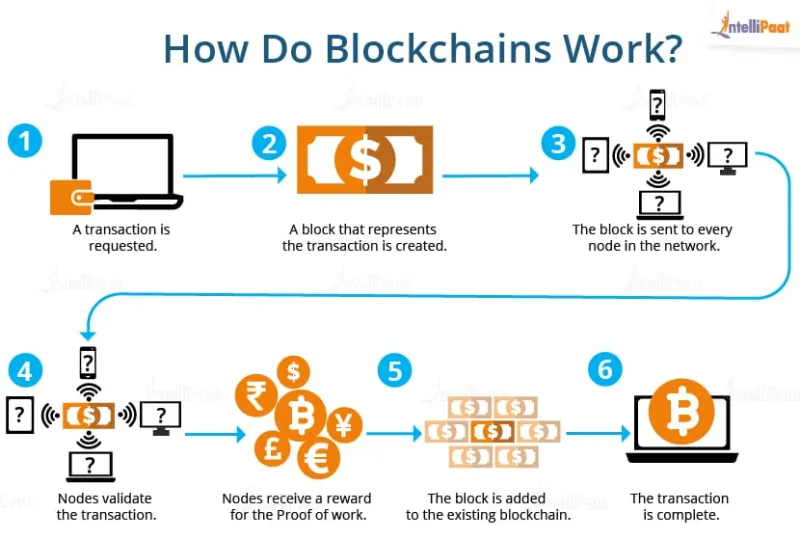
Gas fees are the compensation paid to network validators or sequencers for processing and recording transactions. On proof-of-work and proof-of-stake networks, this cost fluctuates based on network congestion, block space demand, and protocol-level parameters. What appears to be a negligible per-transaction cost becomes material when compounded across dozens or hundreds of monthly interactions.
Consider a retail trader executing ten trades per week on Ethereum's mainnet during a period of moderate congestion. At $15 to $40 per transaction—a range that has been entirely realistic during active market periods—that trader is absorbing $600 to $1,600 in fees monthly before a single position turns profitable. For a collector minting NFTs or a merchant processing on-chain payments, the math is equally unforgiving.
The consequence is not merely reduced margins. High gas costs create behavioral distortions: traders hold positions longer than optimal to avoid exit fees, collectors pass on legitimate opportunities because minting costs exceed expected upside, and smaller accounts are effectively priced out of participation entirely. These distortions have driven one of the most significant migrations in blockchain history.
Ethereum's Layer-2 Ecosystem: Scaling Without Abandoning Security
Ethereum's response to its own fee problem has been the layer-2 rollup—a class of protocols that batch transactions off the main chain, settle proofs on Ethereum's base layer, and pass dramatically reduced costs to end users. In 2025, this ecosystem has reached a level of maturity that makes it the default choice for a growing segment of traders and developers.
Arbitrum remains one of the most widely adopted optimistic rollups, offering transaction fees that typically range from a few cents to under a dollar for standard swaps and transfers. Its compatibility with Ethereum's existing tooling means that protocols and users can migrate without rebuilding infrastructure from scratch. For traders who value Ethereum's security guarantees but cannot justify mainnet fees, Arbitrum represents a pragmatic middle path.
Base, developed by Coinbase, has emerged as a significant competitor within the layer-2 space, drawing retail participation through its accessibility and integration with Coinbase's existing user base. Its fee structure is similarly low, and its growing NFT and DeFi ecosystem has made it a meaningful destination for on-chain commerce.
Optimism and zkSync Era round out a competitive field, each offering variations on the fee-reduction thesis with different technical architectures and ecosystem incentives. The proliferation of credible layer-2 options has effectively made "Ethereum is too expensive" an increasingly outdated objection—though it has also introduced fragmentation that traders must navigate carefully.
Solana's Fee Model: A Different Architecture, Different Trade-offs
While Ethereum's ecosystem pursued vertical scaling through rollups, Solana took a horizontal approach—building a high-throughput layer-1 designed from the outset to process thousands of transactions per second at near-zero cost. In 2025, Solana's fee structure remains one of its most compelling attributes, with standard transactions costing fractions of a cent under normal conditions.
For NFT collectors and high-frequency traders, this fee environment is transformative. A collector minting a large edition NFT drop on Solana might spend less than $1 in total fees—a figure that would represent a single failed transaction on Ethereum mainnet during peak demand. This cost advantage has made Solana the preferred home for certain categories of on-chain commerce, particularly those involving high transaction volumes or micropayment workflows.
However, Solana's architecture involves trade-offs. Network outages and congestion events—while less frequent than in prior years—remain part of the platform's operational history. Traders who require absolute uptime certainty must weigh Solana's fee advantages against its reliability profile. Additionally, the ecosystem's validator concentration and governance dynamics differ meaningfully from Ethereum's, a consideration relevant to longer-term capital deployment.
The Emerging Cost-Benefit Calculus
What has emerged in 2025 is not a single winning blockchain but a segmented landscape where different use cases gravitate toward different fee environments. Understanding this segmentation is essential for traders and collectors making strategic allocation decisions.
High-value, infrequent transactions favor Ethereum mainnet or its layer-2 equivalents, where security and finality guarantees justify higher per-transaction costs. A trader settling a significant DeFi position or a collector purchasing a high-value NFT may reasonably accept higher fees in exchange for the credibility and liquidity depth of the Ethereum ecosystem.
High-frequency, lower-value interactions—including active trading, NFT minting, and on-chain gaming—are increasingly migrating to Solana, Arbitrum, or Base, where fee efficiency directly translates to improved net returns.
Merchant and commerce workflows requiring consistent, low-cost settlement are exploring newer entrants alongside established layer-2 solutions, with fee predictability often weighing as heavily as raw cost in the evaluation.
Practical Steps for Gas-Aware On-Chain Strategy
For traders and collectors operating across multiple chains, a few practical habits can meaningfully reduce total fee burden:
-
Time non-urgent transactions during off-peak hours. Ethereum mainnet fees fluctuate significantly between weekday business hours and weekend evenings. Tools like Etherscan's gas tracker provide real-time visibility into current network conditions.
-
Use gas estimation tools before executing complex interactions. Multi-step DeFi transactions or contract deployments can consume significantly more gas than anticipated. Simulating transactions before broadcast prevents costly surprises.
-
Evaluate bridging costs as part of total chain migration math. Moving assets from Ethereum mainnet to a layer-2 involves bridging fees and potential waiting periods. These costs should be factored into any chain migration decision.
-
Monitor fee trends on emerging chains before committing volume. Newer networks often launch with artificially low fees that rise as adoption grows. Historical fee data provides a more reliable basis for long-term planning than current promotional conditions.
Gas as a Competitive Variable
The blockchain networks gaining ground in 2025 are not simply those with the most sophisticated technology or the largest developer communities—they are the ones that have solved the fee problem for their target users. Gas economics have become a competitive moat, and the chains that maintain predictable, low-cost transaction environments will continue to attract the traders, collectors, and merchants who power on-chain commerce.
At B8C Store, every transaction is an on-chain commitment. Understanding what that commitment costs—across every chain you engage—is the foundation of sustainable, profitable participation in the digital asset economy.