Your On-Chain History Never Forgets: Building a Tax Liability Map from Your Wallet's Past
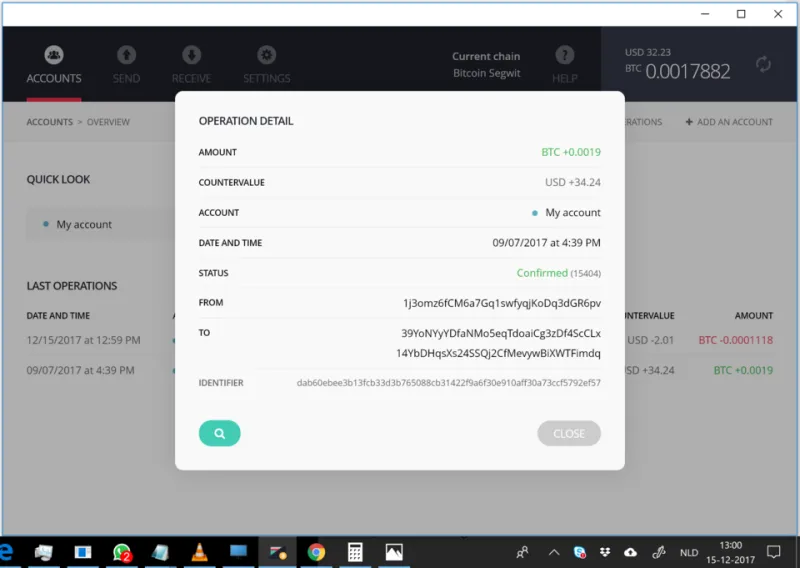
Photo: FlippyFlink, CC BY-SA 4.0, via Wikimedia Commons
There is a particular irony embedded in the architecture of blockchain technology. The same immutability that makes on-chain ownership trustworthy also makes every financial decision you have ever executed permanently visible. For traders who have spent years accumulating positions, rotating between wallets, and chasing momentum across multiple networks, that permanence is not merely a technical curiosity. It is a forensic record—one that the Internal Revenue Service is increasingly equipped to interpret.
Most active traders spend their attention on current holdings: what they own today, what it is worth, and where they intend to move next. Far fewer invest equivalent energy in understanding what their transaction history already says about them. That asymmetry is where significant, avoidable tax liability tends to accumulate.
The Blockchain as a Financial Timeline
Every wallet address you have ever used is, in effect, a dated ledger of your economic behavior. Each swap, transfer, mint, sale, and bridge interaction carries a timestamp, a counterparty, and an assigned value at the moment of execution. Unlike a brokerage account where records are curated and delivered to you on a 1099, on-chain activity requires you to reconstruct the narrative yourself.
The challenge is that most traders have not done this work systematically. They may recall the broad strokes—the Ethereum position entered in early 2022, the NFT collection purchased and partially liquidated over eighteen months—but the granular record of every gas-denominated micro-transaction, every token approval that moved value, and every cross-chain bridge that triggered a taxable disposition often remains unexamined.
The IRS treats cryptocurrency as property. That classification means virtually every transaction—not just the profitable ones—is a potential taxable event. Swapping one token for another, receiving staking rewards, or even paying gas fees in certain contexts can generate reportable income or capital gains. If your transaction history spans multiple wallets and several years, the number of unexamined events may be substantial.
Wallet-Hopping and the Wash Sale Problem
One pattern that warrants particular scrutiny is what practitioners sometimes call wallet-hopping: the practice of selling an asset from one address and repurchasing it through a different wallet in a short window. Traders often do this for operational reasons—consolidating holdings, separating collection categories, or simply using a newer address. But the tax implications of the underlying transactions do not disappear because the receiving wallet is different.
Federal wash sale rules, as currently codified, apply specifically to securities. Cryptocurrency does not fall under that statutory definition at present. However, this distinction should not be mistaken for a permanent safe harbor. Legislative proposals to extend wash sale treatment to digital assets have circulated in Congress with increasing seriousness, and the IRS has signaled continued interest in transactions that appear structured to manufacture losses while maintaining economic exposure.
More practically, even under existing rules, traders who have used wallet-hopping to time losses without a genuine change in position may find that reconstructing the full picture creates complications they did not anticipate—particularly when cost basis calculations depend on which specific lots were sold and which were retained.
Timing Mismatches Between Intent and Execution
Another underexamined area involves the gap between when a trader decides to act and when a transaction actually settles. In volatile markets, the price of an asset at the moment you initiate a transaction and the price at the moment it confirms on-chain can differ meaningfully. For tax purposes, the on-chain confirmation timestamp governs. This creates situations where a trader's internal accounting—based on the price they intended to transact at—diverges from the legally relevant figure.
Across a large transaction history, these discrepancies can accumulate into material differences. A retroactive audit that reconstructs cost basis using actual confirmation times rather than approximations may produce a gain or loss profile that looks quite different from what the trader assumed. Identifying these mismatches before an inquiry is filed gives you the opportunity to correct the record on your own terms.
Building a Retroactive Record-Keeping Framework
The most defensible approach to this problem is systematic rather than reactive. The following framework provides a starting point for traders who want to understand their complete liability profile before the IRS develops its own version of the story.
Step one: Compile every wallet address you have ever used. This includes hardware wallets, software wallets, exchange-connected addresses, and any wallets associated with DeFi protocols or NFT platforms. If you have used a multi-chain environment, this list should span every network where you have held or transacted assets.
Step two: Export complete transaction histories from each address. Blockchain explorers such as Etherscan, Solscan, and their equivalents on other networks provide exportable transaction logs. Third-party tax tools—Koinly, TaxBit, and CoinTracker are among the more widely used in the US market—can aggregate these exports and attempt to match transactions across wallets. No automated tool is perfect, but they provide a workable starting structure.
Step three: Flag transactions that lack clear cost basis documentation. These typically include assets received as gifts, tokens acquired through airdrops, rewards distributed by DeFi protocols, and any purchase made on a platform that no longer operates or does not maintain accessible records. Each of these requires manual investigation and, in some cases, a defensible methodology for estimating fair market value at the time of receipt.
Step four: Identify cross-wallet transfers and reconcile them against external sales. A transfer between your own wallets is not itself a taxable event, but it can obscure the chain of custody that determines which cost basis applies to a subsequent sale. If your records do not clearly document that a receiving wallet holds assets originally purchased at a specific price, you may default to a less favorable basis calculation.
Step five: Review the timeline for any patterns that resemble structured loss harvesting. This is not about assuming bad intent—it is about understanding what your transaction history looks like to an outside examiner. If your record shows repeated cycles of selling at a loss and repurchasing similar assets within short windows, even across different wallets, that pattern will attract attention in any future review.
The Cost of Waiting
The IRS has invested meaningfully in blockchain analytics capabilities, and the firms that provide those capabilities—Chainalysis and Elliptic among them—work across both law enforcement and regulatory contexts. The notion that on-chain activity is practically obscure from a tax enforcement perspective has not been accurate for some time.
Traders who conduct their own wallet audits proactively are in a fundamentally different position than those who receive an inquiry first. The former can engage a qualified tax professional with organized records, a clear narrative, and the opportunity to file amended returns where appropriate. The latter must reconstruct the same history under time pressure, with penalties already potentially accruing.
At B8C Store, the conviction underlying our editorial perspective is straightforward: on-chain commerce is the future of financial activity, and that future is most durable when it is built on rigorous, honest record-keeping. The blockchain never forgets. The most sophisticated traders have decided they would rather be the first to read what it says.