Beyond the Private Key: How Programmable Wallets Are Redefining On-Chain Identity in 2025
For most of crypto's existence, a wallet was a relatively simple construct: a private key that authorized transactions, paired with a public address that received them. Lose the key, lose everything. That binary reality defined self-custody for years. In 2025, however, a different model is gaining serious traction — one where the wallet itself is a piece of software with its own rules, permissions, and recovery logic baked directly into the blockchain.
Smart contract wallets, sometimes called account abstraction wallets, represent a fundamental shift in how on-chain identity is structured. They are not simply a new interface for the same old infrastructure. They are a new kind of account entirely.
EOAs vs. Smart Contract Wallets: A Structural Distinction
To understand what makes smart contract wallets significant, it helps to start with what they replace. Traditional crypto wallets operate as externally owned accounts, or EOAs. An EOA is controlled by a single cryptographic key pair. When a user signs a transaction, that signature is the only authorization the network requires. There is no fallback, no programmable logic, and no mechanism for enforcing behavioral rules beyond the key itself.
Smart contract wallets, by contrast, are governed by code deployed on-chain. Rather than a private key being the sole arbiter of account control, a smart contract defines the conditions under which transactions are valid. Those conditions can be as simple or as sophisticated as the developer — or the user — chooses to make them.
This distinction matters enormously in practice. An EOA cannot natively enforce a daily spending limit. It cannot require multiple approvals before a large transfer executes. It cannot automatically rotate its own signing key on a schedule. A smart contract wallet can do all of these things, and more.
What Programmable Wallets Actually Enable
The capabilities unlocked by smart contract wallets fall into several practical categories that are particularly relevant to active traders and serious collectors.
Automated Transaction Logic. A smart contract wallet can be configured to execute trades under predefined conditions without requiring manual intervention at the moment of execution. This is not the same as a centralized bot operating on an exchange. The logic lives on-chain, meaning it is transparent, auditable, and not dependent on a third-party server remaining operational. For traders who operate across multiple time zones or who need to respond to market conditions without being present at a screen, this capability has genuine utility.
Spending Controls and Permission Tiers. Rather than treating every transaction as equal, smart contract wallets can enforce tiered authorization. A small transaction might require only a single signature. A transfer above a defined threshold might require two-of-three approvals from designated signers. This kind of granular permission structure is standard practice in institutional finance and is now accessible to individual users operating entirely on-chain.
Social Recovery and Key Replacement. Perhaps the most discussed feature of smart contract wallets is their ability to recover from key loss without relying on a seed phrase alone. Users can designate trusted contacts — or even other smart contracts — as recovery guardians. If a signing key is compromised or lost, the recovery mechanism allows a new key to be authorized without abandoning the account or its history. This addresses one of the most persistent failure modes in self-custody: the irreversible loss of access due to a single point of failure.
Gas Sponsorship and Flexible Fee Payment. Through account abstraction standards like ERC-4337, smart contract wallets can support sponsored transactions, where a third party pays the gas fee on behalf of the user. They can also allow fees to be paid in tokens other than the native chain currency. For collectors transacting frequently across NFT marketplaces, this removes one of the more tedious friction points in day-to-day on-chain activity.
The Trade-Offs That Demand Honest Assessment
Smart contract wallets are not without complexity, and any honest evaluation must account for the risks that accompany their advantages.
The most significant concern is the expanded attack surface. An EOA's security model is straightforward: protect the private key. A smart contract wallet introduces code as an additional variable. Bugs in wallet logic, misconfigured permissions, or vulnerabilities in the underlying smart contract can create exploitable conditions that would not exist in a simpler account structure. This is why the audit history of any smart contract wallet implementation deserves serious scrutiny before a user commits meaningful assets to it.
Deployment costs also deserve consideration. Unlike EOAs, which exist as soon as a key pair is generated, smart contract wallets must be deployed to the blockchain — a process that incurs gas fees. On networks with lower fee environments this is a minor concern, but on Ethereum mainnet during periods of congestion, deployment costs can be material.
There is also the question of cross-chain portability. A smart contract wallet deployed on one network does not automatically exist on another. Users who operate across multiple chains must manage deployments separately, adding operational overhead that EOA users do not face.
Finally, smart contract wallets introduce a learning curve that is not trivial. The configuration options that make them powerful also require users to make deliberate decisions about permissions, recovery structures, and transaction policies. For users who prefer simplicity, this complexity may outweigh the benefits.
Who Benefits Most in the Current Landscape
The value proposition of smart contract wallets is not uniform across all user types. Active traders who execute high volumes of transactions and who need automated logic or granular permission structures will find the most immediate utility. Collectors managing significant NFT portfolios — particularly those who interact with multiple marketplaces and need to delegate limited permissions to collaborators or platforms — stand to benefit substantially from tiered authorization models.
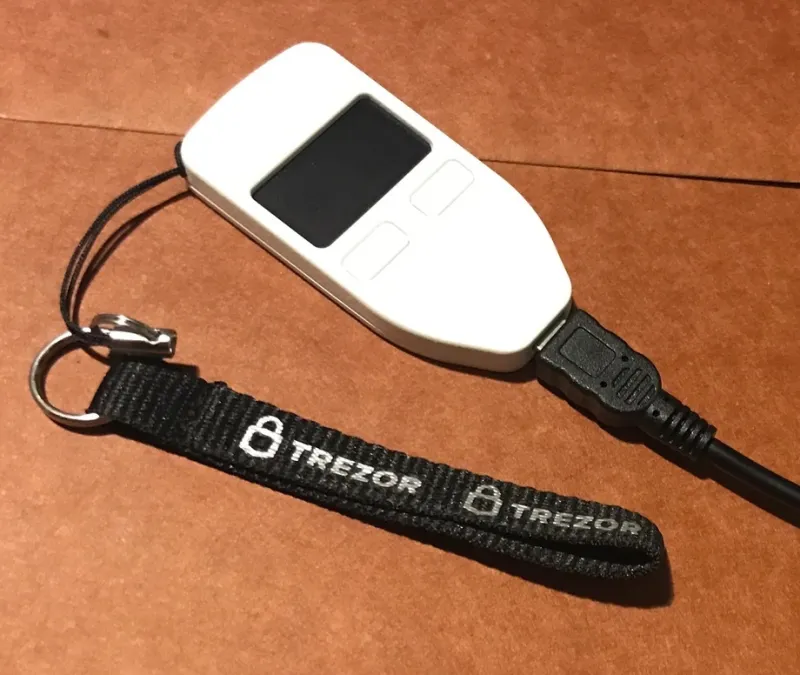
For casual users or those who transact infrequently, the overhead of deployment and configuration may not be justified by the marginal gains in flexibility. In those cases, a well-secured EOA with a hardware wallet remains a defensible choice.
The institutional and semi-professional tier, however, is where smart contract wallets appear to be gaining the most durable traction. As on-chain commerce matures and the assets being managed grow in value, the demand for account structures that mirror the controls available in traditional financial infrastructure will only increase.
On-Chain Identity Is Becoming a Design Problem
The deeper implication of smart contract wallets is that on-chain identity is no longer simply a cryptographic fact — it is increasingly a design decision. The rules governing how an account behaves, who can authorize actions on its behalf, and how it recovers from failure are all choices that users and developers now make deliberately.
This shift aligns with a broader maturation of the on-chain ecosystem. As blockchain-based commerce expands beyond speculation into genuine utility — covering trading, collecting, and transacting in assets with real economic weight — the infrastructure supporting individual accounts must evolve accordingly.
For participants who take their on-chain activity seriously, understanding smart contract wallets is no longer optional background knowledge. It is foundational to building an account structure that is resilient, capable, and appropriate for the complexity of what they are actually doing on-chain.